Connecting intercultural dialogue, civic engagement and democratic resilience for a more inclusive Europe
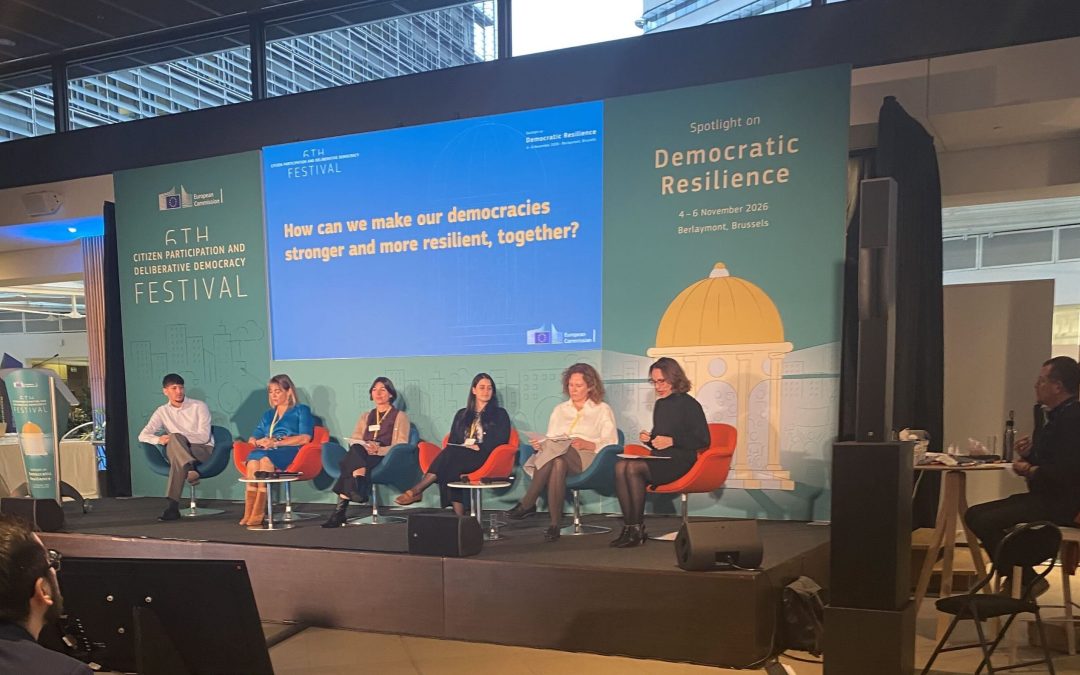
The Intercultural Dialogue Platform (IDP) participated in the sixth edition of the Citizen Participation and Deliberative Democracy Festival, held in Brussels from 4 to 6 November 2026. Organised by the European Commission’s Competence Centre on Participatory and Deliberative Democracy at the Joint Research Centre (JRC), the festival brought together representatives of European institutions, public authorities, civil society organisations, researchers and citizens to explore innovative approaches to democratic participation.
The festival provided an important opportunity to exchange knowledge, explore emerging participatory practices and reflect on the role of civil society in strengthening democratic resilience, institutional trust and inclusive governance across Europe.
For IDP, whose mission centres on intercultural dialogue, social cohesion and active citizenship, the event highlighted the close relationship between meaningful dialogue and effective democratic participation.
Advancing Participatory Democracy within the European Union
At a time when European democracies face growing challenges related to societal polarisation, declining institutional trust and barriers to civic engagement, strengthening citizens’ participation has become an increasingly important European policy priority.
The festival’s discussions reflected the broader ambitions of the European Democracy Shield, particularly its emphasis on strengthening societal resilience and citizens’ engagement. They also aligned with the principles enshrined in Article 11 of the Treaty on European Union, which establishes the importance of participatory democracy and regular dialogue between EU institutions and civil society.
During the opening sessions, European Commission representatives emphasised the importance of integrating citizen participation into policymaking from its earliest stages and establishing stronger connections between local participatory initiatives and European decision-making processes.
Michael McGrath, European Commissioner for Democracy, Justice, the Rule of Law and Consumer Protection, underlined the need to continuously nurture and renew democracy. In his keynote address, Professor Óliver Escobar explored the relationship between democratic legitimacy, shared power and collective action, highlighting the potential of participatory processes to mobilise citizens’ knowledge, experience and capacity to address societal challenges.
These discussions reinforced the importance of moving beyond consultation towards meaningful, accessible and accountable forms of participation.
From Local Participation to European Democratic Resilience
Throughout the festival, practical examples from across Europe demonstrated how participatory democracy can contribute to addressing public policy challenges while strengthening relationships between citizens and institutions.
The Vienna Climate Team illustrated how residents can collaborate with municipal experts to develop climate-related initiatives, with randomly selected citizens’ juries deciding which projects should receive funding. Its inclusive approach, allowing eligible residents to participate regardless of citizenship, offered a valuable example of broadening access to democratic engagement.
Similarly, the Vilnius Citizens’ Assembly demonstrated how deliberative processes can bring residents together to develop recommendations on sustainable urban mobility and contribute to local policymaking.
Closer to home, the Brussels-based neighbourhood initiative I Love My Street, established in Saint-Gilles, illustrated how everyday encounters between neighbours can strengthen social cohesion, build mutual trust and foster cooperation with local institutions.
Together, these initiatives demonstrated that democratic resilience is built not only through formal institutional mechanisms but also through sustained community engagement, inclusive dialogue and meaningful opportunities for collective action.
Empowering Young People and Promoting Democratic Citizenship
The festival placed particular emphasis on the participation of children and young people in democratic life.
The EU Children’s Participation Platform presented approaches through which children can actively contribute to agenda-setting and the design of participatory activities. Other sessions explored innovative methodologies, including legislative theatre, which enables young people to translate their lived experiences into collective discussions and policy proposals.
Citizenship education, critical thinking, media literacy and digital citizenship also featured prominently throughout the programme. Discussions highlighted the importance of equipping young people with the knowledge, skills and confidence necessary to engage constructively in democratic life.
For IDP, these approaches are particularly relevant to efforts to promote active citizenship, intercultural understanding and the meaningful participation of individuals from diverse cultural and social backgrounds.
Ensuring that underrepresented communities have accessible opportunities to participate remains essential to building a more inclusive and representative European democracy.
Harnessing Digital Innovation for Inclusive Democracy
Another significant dimension of the festival concerned the role of civic technology and artificial intelligence in supporting democratic participation.
Discussions surrounding the development of the EU Civic Tech Hub highlighted opportunities for greater collaboration between public authorities, technology developers, researchers and civil society organisations.
Artificial intelligence was explored as a potential tool for facilitating multilingual participation, improving accessibility and supporting the analysis of citizens’ contributions. At the same time, participants emphasised the importance of transparency, human oversight and safeguarding minority perspectives.
From a civil society perspective, digital innovation offers considerable opportunities to reduce barriers to participation. However, technological solutions must complement human interaction and be guided by democratic values, fundamental rights and principles of inclusion.
The Role of Civil Society in Bridging Citizens and Institutions
A central takeaway from the festival was the importance of civil society organisations in connecting communities with democratic institutions.
Intercultural dialogue can create the conditions for meaningful democratic participation by fostering mutual understanding, facilitating constructive exchanges across differences and enabling individuals to articulate their concerns and aspirations.
For participatory processes to generate lasting impact, however, they must be supported by institutional commitment, adequate resources, transparent decision-making and effective follow-up mechanisms. Citizens should be able to understand how their contributions are considered and how they inform subsequent decisions.
For IDP, this reinforces the importance of connecting dialogue-based initiatives with broader opportunities for civic engagement and democratic participation, ensuring that the relationships and understanding developed through dialogue extend beyond individual encounters.
IDP’s Commitment to an Inclusive and Participatory Europe
IDP’s participation in the festival reflects its continued commitment to promoting intercultural dialogue, active citizenship, social cohesion and democratic values at local, national and European levels.
As European institutions advance their efforts to strengthen democratic resilience and citizen participation, civil society organisations have an important role to play in ensuring that these efforts reach diverse communities, including those traditionally underrepresented in democratic processes.
IDP remains committed to fostering cooperation with European institutions, public authorities, academic institutions and civil society partners to advance inclusive approaches to democratic participation.
By connecting intercultural dialogue with active citizenship and participatory governance, IDP seeks to contribute to a more inclusive, cohesive, resilient and democratic Europe, one in which diversity is recognised as a strength and every individual has a meaningful opportunity to contribute to shaping our shared future.
Recent Comments